Climate policy and institutional framework

For iCS, it is essential to consolidate the climate agenda as a state policy, ensuring that its guidelines remain in place regardless of government cycles. To this end, this axis works to promote a solid institutional, regulatory, and economic framework for the implementation of evidence-based climate policies and the participation of key stakeholders at the national, subnational, and international levels.
Política Nacional

National Policy

iCS seeks to strengthen the construction of a participatory and robust Climate Plan that leads to measures for compliance with the Brazilian NDC, ensuring its alignment with other structural policies and plans, such as the PTE, PAC and others.

Approach:

Política Subnacional

Subnational
Policy

Recognizing the importance of the subnational governments in the implementation of the climate policies and the challenges existing in a federative system, iCS acts prioritizing actions with the states, strengthening a federative climate pact, promoting policies in favor of the climate and training civil servants.

Approach:

Política Internacional

International
Policy

The iCS International Policy front acts as a bridge between global
agreements and Brazilian climate policy, empowering Brazilian society to participate in events and forums, increasing its engagement and representation in negotiations and action agendas, and strengthening the country on the international stage.

Approach:

Economia e Clima

Economy and
Climate

iCS promotes the integration of the economy, finance and the main climate policies, and supports the construction of a field that is capable of dialogue, carrying out research and decision-making based on this thematic overlap.

Approach:

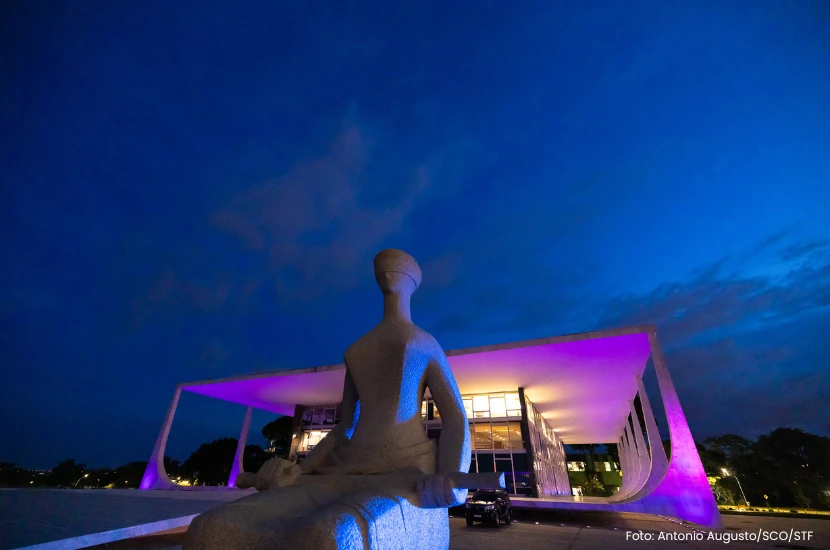
Photo-Antonio-AugustoSCOSTF-1

Regulation

iCS supports initiatives to strengthen the justice system, recognizing its strategic role in climate governance, and works in an integrated manner to improve the regulatory frameworks, combat environmental crimes and expand the access to justice.

Approach:

Financiamento Climático

Climate Finance

The Climate Finance front works to expand and direct financial resources to climate agendas in Brazil by promoting the optimal use of public funds and encouraging private sector participation in mitigation and adaptation projects and international cooperation, directing resources from developed countries to developing nations.

Approach:

Team

Erika Melhorance Gouveia

Public Policy and Climate Change Manager

Bruna Guimarães

Climate Adaptation Specialist

Carmynie Xavier

Subnational and Legislative Climate Policy Specialist

Carolina Monserrat

Project Analyst

Felipe Novaes da Rocha

Climate Economy Specialist

Marina Caetano

Climate Policies Specialist

Sarah Irffi

Climate Economy Specialist

Grants

2026
month 8
15 months

To strengthen multilevel climate governance in Brazil by enhancing the capacity and engagement of subnational governments and parliamentarians in climate action, sustainable development, and just transition agendas. The project will promote institutional capacity building, knowledge production, policy exchange, and coordination across different levels of government, supporting the implementation of NDC. It will also strengthen Amazon regional cooperation through parliamentary diplomacy and engagement with the Amazon Parliament (Parlamaz).

2026
month 7
12 months

If the decisions on adaptation from Belém are not quickly interpreted and tested by Global South coalitions, the momentum is likely to be lost. This project brings together Latin America and builds bridges with other developing countries to generate shared interpretations and public pressure through COP31.

2026
month 6
24 months

To promote the integration of climate, geopolitics, and development to strengthen Brazil’s role in the international agenda. The project will produce strategic analyses, facilitate high-level dialogues, and engage public and private actors to inform policies, attract investment, and enhance the country’s influence in the transition to a low-carbon economy.

2026
month 4
24 months

The project seeks to strengthen network-based action to advance socio-environmental agendas and prevent setbacks, promoting the elimination of environmental crimes and deforestation. It works on the protection and restoration of forests, a just energy transition, climate adaptation, and the promotion of social justice. It also engages in national and international advocacy to increase climate ambition and promote the phase-out of fossil fuels.

2026
month 3
12 months

To contribute to strengthening environmental collective redress mechanisms to protect communities vulnerable to extreme climate events. The project aims to consolidate the role of Independent Technical Assistance (ITA) as a tool for the effective realization of rights. It also seeks to engage with the Legislative Power in defense of environmental collective protection and to analyze the impacts of structural litigation before the Supreme Federal Court (STF).

2026
month 3
7 months

To evaluate the decisions of COP30, conduct critical analysis and produce content on their potential impacts on international climate governance and on topics such as biodiversity, trade, finance, and development. This analysis will be reflected in the 2026 edition of the Global Policy Dialogue, with representatives from various sectors and countries, resulting in recommendations on reforms in global climate governance and Brazil’s role.

2026
month 3
18 months

To strengthen the formulation and public debate of climate policies in Brazil, with a particular focus on energy transition and mineral governance, by combining the production of technical evidence, political intelligence, and targeted advocacy strategies to enhance the capacity of the Legislative branch to incorporate economic climate arguments into decision-making processes.

2026
month 3
12 months

To analyze the public budget for climate adaptation, focusing on expenditures for disaster prevention, preparedness, and recovery, from national and regional perspectives. Furthermore, to promote advocacy activities to discuss this topic and its relationship to budget classification, the subject of the previous project.

2026
month 3
9 months

To continue providing technical training and support to civil society organizations and public servants in monitoring the decisions, submissions, and technical issues of the Paris Agreement and UNFCCC negotiations, with special attention to the results and legacy of COP30 and the transition from the Brazilian presidency to the presidency of COP31.

2026
month 3
10 months

To strengthen the implementation of gender- and race-responsive climate policies building on the legacy of COP30, focusing on operationalizing the Belém Gender Action Plan (GAP) and addressing gaps between international commitments and concrete policies at national and subnational levels. The project advances this goal by strengthening municipal capacities to integrate gender and race into climate action and by supporting GAP implementation through evidence generation, network engagement, and advocacy.

2026
month 3
12 months

To strengthen a strategic leverage point in Brazil’s climate agenda by bridging national climate policies with municipal-level action. By combining evidence generation, policy proposals and multilevel advocacy, the project contributes to enhancing subnational climate governance and institutionalizing climate justice within urban policies.

2026
month 2
18 months

To support the Amazonian scientific community, more specifically linked to the Research Network for a Sustainable Economy of the Amazon (RESA), in qualifying and seeking funding for research projects, via the Research Support and Small Grants Mechanism (MAPPS). This mechanism allows for better coordination among researchers in the development of their projects, strengthening reserach networks.

2026
month 1
12 months

To analyze public investments in community social development in the Legal Amazon, fostering their connection with initiatives to combat organized crime and strengthening sustainable alternatives in vulnerable territories. The project aims to propose recommendations that enhance coordination between existing initiatives and territorial needs amid rising criminal activity.

2026
month 1
18 months

To strengthen subnational climate policy through integrated actions that enhance transparency, governance, and the implementation of state-level climate commitments. To ensure coordination and institutional capacity, to support the consolidation of the “Climate Change Yearbook of The Brazilian States” as a monitoring reference, to incorporate climate criteria into regulatory frameworks, and to provide technical support to the Brazil Green Consortium.

2025
month 12
15 months

Support the consolidation of GFLAC in Brazil, contributing to increasing transparency on climate finance, through collaboration with the TCU, with the Climate Scanner, and assisting the government in thinking about the investment and financing plan for the implementation of the NDC/Climate Plan.

2025
month 11
12 months

To support efforts to strengthen the Justice System’s response to environmental and related crimes, while also improving the measurement of environmental and climate damages in collective territories through dialogue between the CNJ and specialized organizations. ISA will monitor deforestation in the Xingu Basin, producing reports and submitting complaints to the relevant authorities.

2025
month 11
18 months

To strengthen environmental and climate governance in Brazil, with support for enforcement agencies and civil society. The project will promote training, legal analyses, and evidence generation, along with recommendations to improve deforestation control tools. It will also enhance tools that connect rural credit with environmental data, increasing transparency and integrity.

2025
month 11
12 months

To advance the discussion on environmental licensing as a critical tool for strengthening climate governance in Brazil, through the development of legal analyses on the new regulations and the regular updating and refinement of the climate cases database.

2025
month 11
36 months

To apply an innovative national accounts methodology to measure the Amazonian bioeconomy by integrating local data on production, income, and land use, generating indicators to support the planning and monitoring of public policies, strengthen sustainability strategies based on sociobiodiversity, and build a permanent local research network.

2025
month 10
24 months

The project assesses the economic viability of rural settlements in the Pantanal, Cerrado, and Amazon biomes (Mato Grosso), integrating territorial, productive, socioeconomic, and environmental analyses. It will use geospatial data (1980–2023) and carbon indicators to map land use, emissions, and mitigation, as well as to simulate sustainable scenarios such as agroforestry systems and carbon credit markets.

2025
month 9
14 months

To advance LEGAL’s activities by strengthening local science in the Amazon region through capacity-building, knowledge exchange, and data production to support climate policy implementation. The project will deliver technical briefs, COP-30-related events, and a mini-documentary on land tenure issues in Pará.

2025
month 9
24 months

Adapt the NetZero economic modeling initiative to Brazil as an open model, accessible to a broad audience and for rapid assessment of the sensitivity and impact of public policies, including, in particular, the land use sector. In addition, the project aims to promote workshops and events to engage different stakeholders in decarbonization planning in Brazil.

2025
month 9
15 months

To strengthen climate governance in Brazil by legally consolidating the commitments assumed under the Paris Agreement—such as the NDC and Article 6—into national legislation. The project aims to prevent legal setbacks, promote legal certainty, and ensure environmental integrity and climate justice through technical analysis, political advocacy, and the capacity building of civil society actors. It will also support MDA in building an advocacy strategy within the framework of the UNFCCC and COP 30.

2025
month 9
10 months

To support the mobilization and engagement of local groups affected by the 2024 floods in Rio Grande do Sul, with a focus on advocacy efforts targeting public authorities and the implementation of campaigns. The initiative seeks to influence the adoption of policies and measures that strengthen resilience to climate-related disasters and ensure that the voices of affected communities are heard and considered in the development of long-term solutions.

2025
month 9
12 months

Contribute to the regulatory and structural design of subnational state and municipal funds, including training of technical staff of agents, dialogue with strategic actors, and alignment of funds with public policies and investment attraction instruments.

Stories

News