Energia do Roçado bets on the agrivoltaic system to strengthen resilience in the Semiarid region
Energia do Roçado bets on the agrivoltaic system to strengthen resilience in the Semiarid region
The integration of solar energy, rainwater harvesting, water reuse, and the production of food and seedlings to restore the Caatinga biome aims to reduce community vulnerability
Amid the expansion of solar and wind energy in the Northeast—which involves the appropriation of vast tracts of land and limited public participation—the “Energia do Roçado” project proposes an alternative that combines solar energy, food production, water access, and territorial justice. The initiative seeks to increase community participation and align energy generation more closely with the needs of families in the Semiarid region.
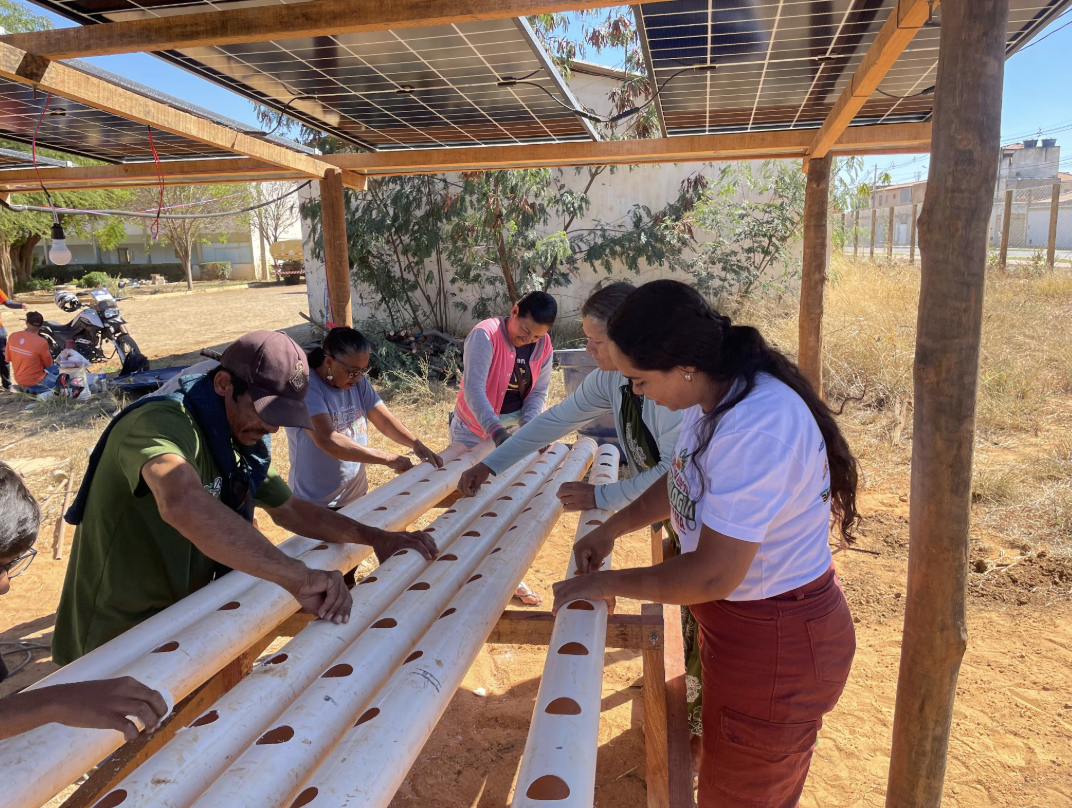
Essentially, the proposal integrates solar energy, rainwater harvesting, wastewater reuse, and the production of food and seedlings for Caatinga restoration into a single agrivoltaic system. This combination aims to strengthen the water, food, and energy security of families and reduce their vulnerability to droughts and increased climate variability.
Carried out by Gaia Social in partnership with iCS, the project was presented during the seminar “Energia do Roçado: Agrivoltaic Solutions in the Caatinga.” The gathering brought together public officials, researchers, technical support organizations, and community leaders to discuss pathways toward a more inclusive energy transition.
The project also opens up space to discuss how climate change adaptation can be built from within the territories themselves—a topic to which iCS is dedicated on a daily basis. In a region where water availability is directly linked to production and household income, solutions that integrate energy, agriculture, and conservation can help increase resilience and strengthen community autonomy.
Credit: Gaia Social