The documents aim to guarantee the participation in the climate debate and the institutionalization of the accreditation of indigenous peoples for COP30 and the future COPs
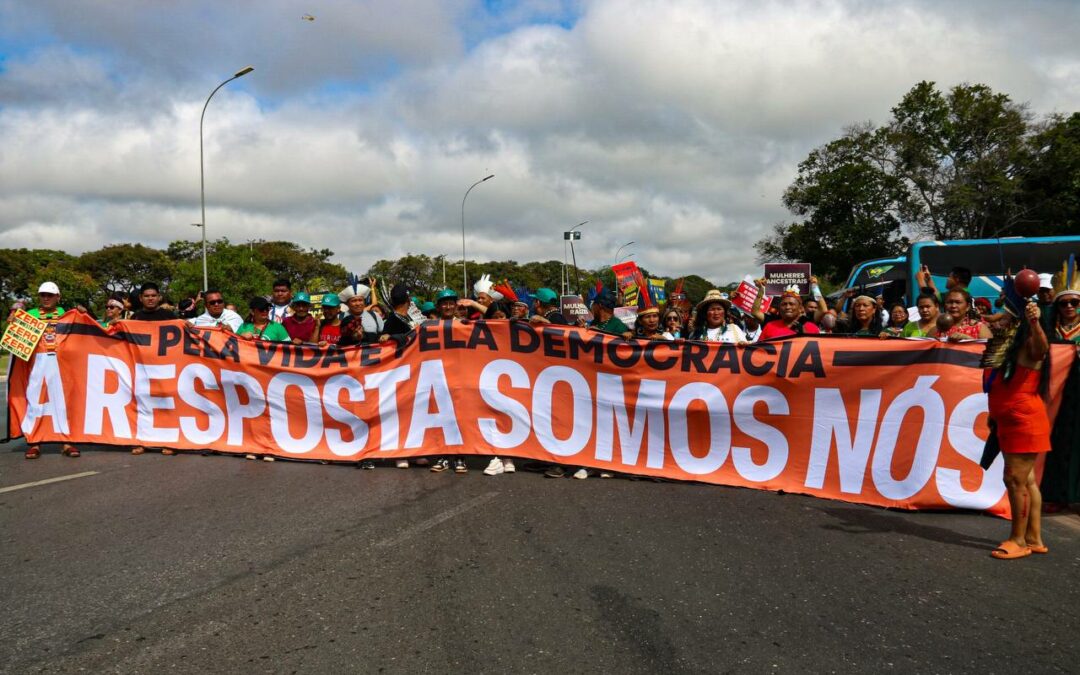
The Coordination of Indigenous Peoples of Brazil (APIB) launched the Indigenous Nationally Determined Contribution (NDC) during the Free Land Camp (ATL). This reinforces that the climate debate will only be just if it considers the “equity,” self-determination and effective participation of the indigenous peoples and traditional communities in the implementation of the Brazilian NDC, within the scope of the Paris Agreement.”
The document is divided into seven thematic areas:
- Mitigation, which argues for the recognition and protection of the territorial rights of the indigenous peoples as an essential policy of climate mitigation;
- Adaptation, which highlights the importance of protecting ancestral knowledge, such as fire management and indigenous medicine;
- Financing, which proposes to review the existing mechanisms and create specific instruments for the direct financing of indigenous organizations;
- Technology transfer, which suggests integrating traditional knowledge to modern science in the climate strategies;
- Training, with a focus on technical education and the access to climate information in an accessible language;
- Justice and ambition, which recognizes the historical debt with the indigenous and traditional peoples;
- Co-benefits, which relates the land demarcation to actions against climate change, strengthening the international commitments of Brazil.
Still at the ATL, the International Indigenous Commission for COP 30 was announced, chaired by the minister Sonia Guajajara. It is composed of the organizations APIB, Coiab (Coordination of the Indigenous Organizations of the Brazilian Amazon), Anmiga (National Coordination of the Indigenous Women Warriors of Ancestry), G9 of the Indigenous Amazon, the Global Alliance of Territorial Communities (GATC) and the UN Permanent Forum on Indigenous Issues (UNPFII), in addition to dialogue for the participation of other indigenous organizations and international forums.
The commission has among its functions the development of a methodology that guarantees the accreditation of the indigenous peoples as an institutionalized practice for future COPs, in addition to ensuring the focus on the specific priorities of the indigenous peoples. It is also involved in the organization of regional meetings, the planning and execution of high-level events and meetings with states parties, UN agencies and allies.
Photo: @sallynhandewa / APIB