Land Use
Brazil is a global leader in agricultural production, playing a key role in global food security. The country has a promising outlook for expanding its global competitiveness in the sector, but to achieve this, it needs to deepen its efforts to integrate agricultural production, conserve native vegetation, and encourage activities that value sociobiodiversity products and ecosystem services across all biomes. It is necessary to support the transition of the land use and agricultural sectors to low-carbon and resilient systems, promoting regenerative practices, forest restoration, and the bioeconomy.
Currently, land-use changes account for the majority of greenhouse gas emissions in Brazil, while the agricultural sector accounts for a quarter of the country’s total emissions. iCS supports the transition to food systems that promote social inclusion, food and nutritional security, traceability, as well as adaptation and reduction of greenhouse gas emissions.
Bioeconomy and
Restoration
iCS focuses on the promotion of the ecosystem restoration and the conservation of the standing forest, with incentives that result in the generation of restoration and bioeconomy businesses and that allow, in addition to carbon capture, more sustainable and competitive regional development, generating employment, income and quality of life for the local populations.
- Products from the sociobiodiversity: promotion of the management and economic exploitation of sustainable products; regional trade arrangements and extensionism; the productive autonomy of family farmers, indigenous peoples, quilombolas and traditional communities; and support for the economy of the standing forest, public policies, tax incentives and knowledge;
- Restoration of the native vegetation: coordination in favor of the capital flows for the restoration; boosting the links of the restoration value chain and the markets for its products and services; the promotion of public policies and regulatory frameworks (Planaveg, the Forest Code, and public concessions, among others) for the large-scale restoration and the expansion of the regeneration of the secondary forests.
Agricultural and
food systems
This area promotes the transition to more regenerative, inclusive and resilient agricultural and food systems, in order to position the country as a global reference and to strengthen the measures of mitigation and adaptation to climate change. Furthermore, it operates to promote access to healthy and sustainable diets, and to raise the awareness of consumers and public opinion.
Approach:
- Green Financing: encouraging regenerative practices through the Safra Plan; establishing a sustainable taxonomy to guide the granting of credit, private investments and the allocation of resources to regenerative practices; supporting the engagement of (public and private) international investors in good agricultural practices in Brazil; and with Pronaf, it provides access to credit for small farmers who adopt sustainable techniques;
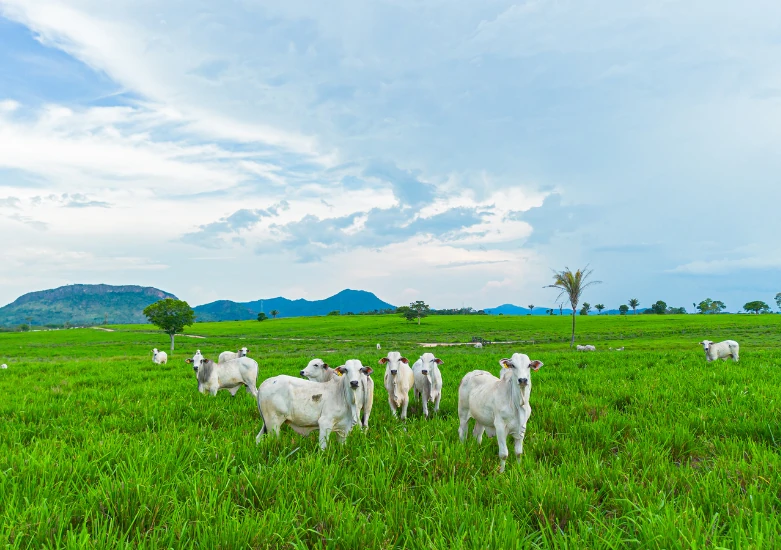
- Cattle breeding: mapping of degraded pastures; production of technical information for policies such as the National Program for the Conversion and Recovery of Degraded Pastures (PNCPD); and the implementation of systems of traceability, with the socioenvironmental monitoring and inclusion of small producers in the Amazon;
- Food: construction of the Food and Climate Framework, to integrate the food security measures with the climate goals; strengthening family farming and the sociobiodiversity chains; organizing and training cooperatives and associations; and promoting a broad agenda at COP 30 about healthy and sustainable food and promoting gastrodiplomacy;
- Leadership: strengthen the role of Brazilian agriculture and livestock as a global leader in the transition to sustainable and regenerative systems; promoting the dialogue, reaching new groups and avoiding polarizations; and advancing in areas in which the country has leadership potential, such as biofuels, green fertilizers, bioinputs and the trade in carbon credits from agriculture and livestock.
Land use
emissions
Approach:
- Transparency and access to information, making the data of the legal and illegal deforestation public through the transparency of Authorizations for Vegetation Suppression; and supporting agricultural, livestock and forestry traceability, promoting sustainable practices and offering whole products aligned with growing market demands;
- Law enforcement and public policies for the protection of the native vegetation and forest restoration; creation of legal solutions for land and environmental issues; quantification of the climate damage; application of sanctions with the use of artificial intelligence; and support to the states in the implementation of the Forest Code.
- Protected areas: appropriate allocation of public lands, land regularization and guarantee of the rights of indigenous peoples, quilombolas and traditional communities; territorial administration instruments and management plans in the indigenous lands and quilombola territories; and the removal and accountability of the offenders;
- Fires: support for federal, state and municipal actions for the prevention and combating of fires in public and private areas; and the promotion of studies about the predisposition/risk of fire, infrastructure for fighting fires and plans of prevention and response.
Team
Grants
To structure a scholarship program aimed at the academic training of young Quilombola researchers from the Amazon at different levels (Undergraduate Research, Master’s, Doctorate, and Post-Doctorate). It aims to establish a network of Quilombola researchers in the Legal Amazon and fund research on topics such as climate justice, bioeconomy, territorial protection, and land regularization.
Enable the operationalization of the Executive Secretariat of the Research Network for a Sustainable Amazon Economy (RESA) for the 2026–2028 cycle, rooting its management in the Amazon and prioritizing: a) the consolidation of its identity and mission; b) informed advocacy with decision-makers; and c) resource mobilization. Additionally, support the doctoral studies of Indigenous anthropologist Braulina Baniwa.
To structure a scholarship program aimed at the academic training of young Amazonian researchers from Traditional Peoples and Communities, at different levels (Undergraduate Research, Master’s, PhD and Post-Doctorate). This will involve granting scholarships, mentoring, coordination with the Research Network on Sustainable Economy of the Amazon (RESA), and the production of technical reports.
To promote research conducted by Indigenous researchers from the Legal Amazon, focused on socio-biodiversity, Indigenous sciences, and territorial sustainability strategies, through a Research Grant Program implemented in partnership with the Amazonian Center for Indigenous Training of COIAB (CAFI).
To strengthen the presence of Brazilian companies in the Amazonian bioeconomy in the international market, facilitating the export of products and services. Planned actions include (1) structuring market intelligence, (2) capacity building and export preparation, (3) trade promotion and business generation, and (4) image promotion and international positioning.
Strengthen governance, coordination capacity, and knowledge production across three complementary initiatives led by the organization in collaboration with partners: the Payments for Ecosystem Services Observatory (OPSA), the Pan-Amazonian Bioeconomy Network, and the Socio-bioeconomy Working Group of the Bioeconomy Challenge.
The project evaluates, using a quasi-experimental approach, the impacts of rural microcredit on smallholder farmers in the Legal Amazon. It examines the presence of the AgroAmigo Program and its absence in comparable areas, estimating effects under real-world conditions. It combines causal inference and participatory methodologies to generate evidence and recommendations for improving rural credit public policies.
Develop and implement a strategic capacity-building program in fine cocoa for producers in the Transamazon region, structured in two modules: Cocoa Quality and International Market Access, focusing on value creation, competitiveness, and market positioning. This project is co-financed by GIZ and TNC – iCS support focuses on international market access.
To advance a political-institutional advocacy strategy to improve Brazil’s rural insurance policy, with a focus on smaller-scale producers. The work combines technical consensus-building based on evidence from Agroicone and the Rural Insurance Observatory, engagement through dialogue roundtables and a multi-stakeholder seminar, and direct advocacy with the Legislative, Executive and regulatory authorities.
To sponsor two Converge Capital initiatives that position iCS with sustainable finance audiences: the 2026 Systemic Investing Summit, a global gathering in Rio de Janeiro bringing together investors and leaders to advance the systemic mobilization of capital; and the first season of the podcast O Clima na Faria Lima, produced with InfoMoney, which brings the climate agenda to financial market audiences through 12 episodes.
To strengthen the economies of Buen Vivir in the Lower Amazon River Basin (PAE Lago Grande, Tapajós Arapiuns Extractive Reserve and floodplains) and place youth as protagonists. The project operates through four pillars: participatory zoning and diagnosis, youth training, popular communication, and living labs to experiment place based socio bioeconomic practices rooted in local knowledge.
Strengthen access to PRONAF and its integration with PNAE through a territorial governance approach to credit and commercialization that increases income and productive inclusion in the Semi-Arid region. As part of PRONAFÃO, the project will focus on the Semi-Arid and engage in regulatory advocacy to improve PRONAF, developing recommendations to adapt its mechanisms to the profile of family farming in the region.
To assess and calibrate, using geospatial and socioeconomic data, the eligibility conditions and minimum safeguards of the Brazilian Sustainable Taxonomy (BST) for rural properties. The results will support the Ministry of Finance in strengthening the BST as an operational tool for public policies, rural credit, and sustainable investments, ensuring environmental integrity and social justice.
To advance transparency and sustainability in agri-food systems, the project is focusing on the meat supply chain and the impacts of animal-based food consumption on health and climate. It seeks to strengthen traceability, expand consumer access to information, and influence public policies, including through importing countries such as China and the European Union. The project also supports reduced meat consumption through healthy dietary diversity.
Contribute to expanding the integrity and scale of forest restoration and carbon projects through: i. a guide to good verification practices; ii. a study on financial losses associated with lack of monitoring/maintenance; iii. climate risk mapping; iv. a workshop on monitoring standards/good practices; v. discussions on Brazilian carbon certification standards.
Expand access for family farming cooperatives to PRONAF by creating a solidarity finance system with community banks, training young credit agents, and providing financial education, while advancing advocacy to reduce bureaucracy in credit access and strengthen sustainable agro-industries.
Analyze climate vulnerability and adaptive capacity in the agricultural sector in Serra da Canastra – MG, strengthening producers and local stakeholders to implement adaptation measures and improve evidence-based policies. The project will develop its own methodology, conduct geospatial and institutional assessments, and present science-based recommendations with strong local engagement.
To strengthen technical capacity and strategic coordination among public, private, and financial actors through a 30-hour executive training program on public instruments, carbon markets, innovative finance, and bioeconomy models, ultimately supporting higher-quality investments in forest conservation, restoration, and sustainable use in Brazil.
To strengthen the scientific basis and economic instruments to address climate risks in Brazilian agriculture by developing more accurate metrics for emissions and removals and improving the integration of rural credit and insurance. Expected results include better-informed public policies, reduced financial risk, and increased resilience for producers.
Strengthen land designation proccesses in Pará and improve the technical-institutional capacity of the states of the Brazil Land Alliance to advance the allocation of state public lands and forests, and implement a proof of concept for the Pará Traceability Program protocols to identify necessary adjustments and ensure their effectiveness for small and medium-sized cattle producers.
To strengthen the productive diversification agenda in Brazilian agriculture as a climate adaptation and mitigation strategy, by fostering informed public debate on existing policies and gaps, and by supporting the coordination of the INCT “Overcoming the Triple Monotony of the Agri-food System,” in order to enhance the sustainable transition of food production, distribution, and consumption systems in Brazil.
To strengthen climate risk management for family farming in Brazil by analyzing and improving Proagro, PSR and PNAE. Led by Agroicone, the project generates evidence and policy recommendations to make rural insurance and public instruments more efficient, accessible, and aligned with regenerative agriculture, contributing to the 2026/2027 Agricultural Plan.
To apply and test, on a pilot scale, the logic of a franchise model (based on the extensive experience of the Trigo Group) to the productive contexts of the Amazonian bioeconomy. Local impact businesses act as franchisors alongside partners/franchisees in their supply chains, contributing to risk reduction, improved efficiency, and increased margins throughout the chains.
Support the structuring of the Natural Intelligence Program, an RD&I initiative for large-scale ecological restoration, including: i. strategic and financial planning; ii. a scientific and technological development plan; iii. a communication strategy; iv. engagement with funders and fundraising; and iv. integration with the cross-cutting strategies of PLANAVEG and other partners.